Is It Best: High-End Diffusers for Home Fragrance or Enesco Gift Sets for Corporate Gifting?
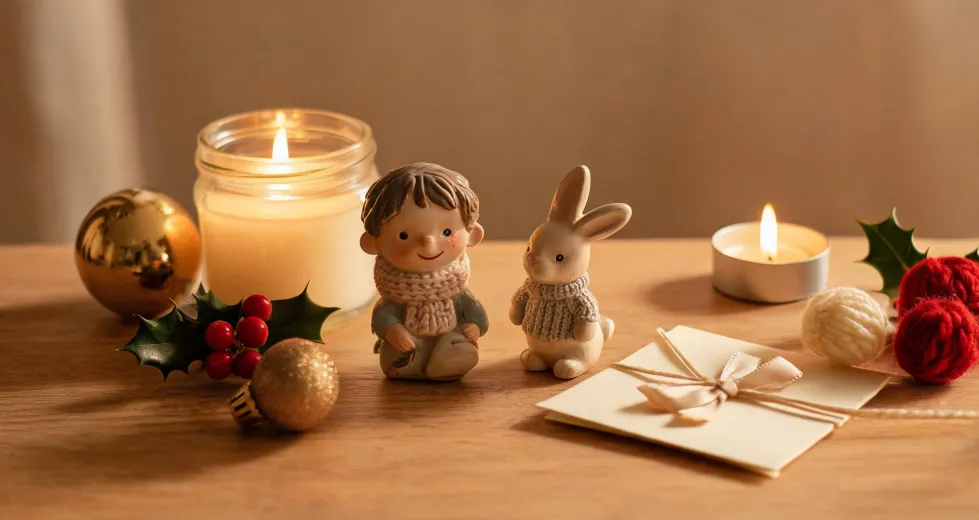
Is It Best: High-End Diffusers for Home Fragrance or Enesco Gift Sets?
I coordinate rush corporate gifting orders at a promotional products distributor. I've handled 200+ rush orders in 7 years, including same-day turnarounds for enterprise clients. When a deadline is close, I don't care about brand prestige. I care about three things: how many hours are left, whether the product can actually ship, and what happens if it doesn't.
So let's compare two common B2B gift choices: high-end diffusers for home fragrance, and Enesco gift sets that include collectible figurines, tea sets, and china figurines. I'll compare them on rush delivery, customization, perceived value, and risk. No fluff. Just what I've seen work—and fail—in real orders.
Rush Delivery: Speed and Availability
High-end diffusers often look like a safe choice. They're sleek, neutral, and easy to understand. But in a rush? They're usually sourced from third-party warehouses or specialty brands with limited inventory. If the specific scent or vessel is backordered, you're stuck. I've seen a 5-day standard lead time turn into 12 days because the 'in stock' status wasn't real-time.
Enesco is different in one practical way: the product range is broad. That matters when you need to swap a scent, a figurine, or a gift set without starting over. Home grown Enesco figurines, Enesco Christmas figurines, tea sets, and china figurines can often be mixed within a themed gift program. If one SKU is unavailable, there's usually a nearby alternative that still fits the occasion.
That said, rush shipping is still rush shipping. According to USPS (usps.com), for the 2024 holiday season, USPS recommended Ground Advantage by Dec 18, Priority Mail by Dec 19, and Priority Mail Express by Dec 21 for delivery by Dec 25. Verify current dates at usps.com as they change annually. If your event is in December, those deadlines are not suggestions. They're the difference between a gift table and an apology email.
In March 2024, 36 hours before a client's leadership summit, we had to replace 400 damaged gifts. Normal turnaround was 5 days. We found Enesco inventory—mostly china figurines and a few tea sets—paid $600 extra in rush freight, and delivered on time. The client's alternative was empty-handed VIP tables. That's the kind of scenario where broad inventory beats a prettier catalog photo.
Customization: Logo vs. Story
High-end diffusers usually offer limited customization. You can add a logo to the box or a tag. Sometimes you can choose the scent. But the product itself stays generic. For some brands, that's fine. For others, it feels like a missed opportunity.
Enesco's advantage here is personalization and licensed IP. The company has an extensive licensed portfolio—Disney, Harry Potter, and others—so a gift can connect to a story people already care about. You can also build around a theme: a Home Grown Enesco figurine for a rustic executive retreat, an Enesco Christmas figurine for a holiday client appreciation, or a tea set and china figurine for a more formal dinner gift.
Here's something vendors won't tell you: the word 'high-end' on a diffuser often describes the packaging, not the scent performance. What most people don't realize is that many diffusers use similar base oils and reeds. The margin is in the label. That doesn't make them bad. It just means you're paying for brand perception, not necessarily a better fragrance experience.
Per FTC advertising guidelines (ftc.gov), claims like 'luxury' or 'premium' must be truthful and substantiated. So when a vendor says 'high-end,' ask what that actually means: higher oil concentration? Better reeds? Or just a heavier box (like a branded ribbon or a magnetic closure)? What I mean is the claim needs a measurable definition.
Perceived Value: One-Time Scent vs. Long-Term Collectible
A diffuser is consumable. The scent fades. The reeds get replaced. Eventually, the vessel may get tossed or donated. That's not a dealbreaker—some clients love a practical gift. But in corporate gifting, practical often becomes forgettable.
Collectible gifts work differently. A china figurine or an Enesco Christmas figurine tends to stay on a desk or shelf. A tea set can be used during meetings or given to a client's family. Home grown Enesco figurines have a specific charm—they feel less like a logo drop and more like something chosen. That longer shelf life can extend your brand's presence long after the event.
I have mixed feelings about this. On one hand, a diffuser is easier to ship and less likely to break. On the other, I've watched clients light up over a figurine that matched their childhood favorite movie. A diffuser rarely gets that reaction. So the 'better' gift depends on whether you want a pleasant unboxing or a lasting memory.
Cost-wise, high-end diffusers often carry a high per-unit price. Enesco gift sets can be scaled: a single china figurine, a tea set for a smaller VIP group, or a bundle with an Enesco Christmas figurine and home fragrance. The efficiency comes from mixing categories, not forcing one SKU to do everything.
Risk: Breakage, Sensitivity, and Deadline Pressure
Every gift has a failure mode. For diffusers, the risks are fragrance sensitivity and leakage. Some offices have scent-free policies. Some people are sensitive to strong oils. If you don't ask, you can create an uncomfortable moment instead of a thank-you.
For Enesco-style gifts, the risk is breakage. China figurines and tea sets need protective packaging. If you're shipping 500 units in a rush, poor packing can turn a beautiful gift into a claims process. I've seen a pallet of ceramics arrive with a 12% damage rate because the vendor used thin inserts. We paid for replacement air freight and still missed two regional events. That's when we implemented a rule: no rush ceramics without a pre-shipment drop test.
The conventional wisdom is that rush orders cost more because they're harder. My experience suggests the opposite. They cost more because they're unpredictable. They break the vendor's normal workflow. If you give a vendor 48 hours, you're asking them to stop everything else. That's why I always build a 48-hour buffer into holiday gifting timelines—even when a vendor promises they can do it.
Efficiency matters here. A vendor with real inventory visibility and a standard rush process can cut turnaround from 5 days to 2 days. That's not just convenience. That's the difference between making the event or eating the cost of a failed campaign.
Which Should You Choose?
If your goal is a simple, low-risk gift for a broad audience—and you have 2–3 weeks of lead time—high-end diffusers for home fragrance can work. They're familiar, easy to ship, and generally scent-neutral in packaging. Just verify the 'high-end' claim and confirm the scent policy of the recipient group.
If your goal is a memorable corporate gift, a VIP thank-you, or a holiday program with tight deadlines, Enesco gift sets often win. The combination of broad inventory, personalization, and collectible appeal gives you more ways to solve a problem when a SKU fails. A Home Grown Enesco figurine, an Enesco Christmas figurine, a tea set, or a china figurine can each carry a different message—without requiring a completely new vendor.
Is it best? High-end diffusers for home fragrance are best when the gift is secondary to the event. Enesco gift sets are best when the gift is part of the memory. I've stopped asking which product is 'better' in general. I ask which one can actually arrive on time, match the client, and survive the shipping. That's the comparison that matters when the deadline is real.

Elise Laurent
Elise Laurent is a crystal and decorative glass quality analyst covering crystal figurines, vases, ornaments, suncatchers, and gift glassware. She examines ISO 6486-1 where food-contact glass dinnerware applies, then uses polarized strain inspection, dimensional checks, surface-defect grading, and refractive clarity to compare decorative pieces outside that scope. Her work helps sourcing teams choose materials, finishing routes, and protective packaging without confusing visual brilliance with verified durability.
Start a gift conversation