Which Promotional Products Provide the Best ROI? It Depends on These 4 Scenarios
I've been handling corporate gift and promotional product orders for 9 years. I've personally made (and documented) 7 significant mistakes, totaling roughly $18,400 in wasted budget. Now I maintain our team's checklist to prevent others from repeating my errors.
So when someone asks, which promotional products provide the best ROI?, I don't give a single product name. I can't. The answer changes based on what you're trying to accomplish. A $4 notebook and a $40 Enesco figurine can both be great—or both be wasted money—depending on the scenario.
Here are the four scenarios I see most often. Find the one that sounds like your situation, then use the judgment guide at the end.
Scenario A: High-value relationship gifting (low volume, high impact)
You're sending gifts to key clients, executives, partners, or prospects you actually want to build a relationship with. Volume is usually under 300. Budget per recipient is higher. The goal isn't impressions. It's retention, referral, or a warmer next conversation.
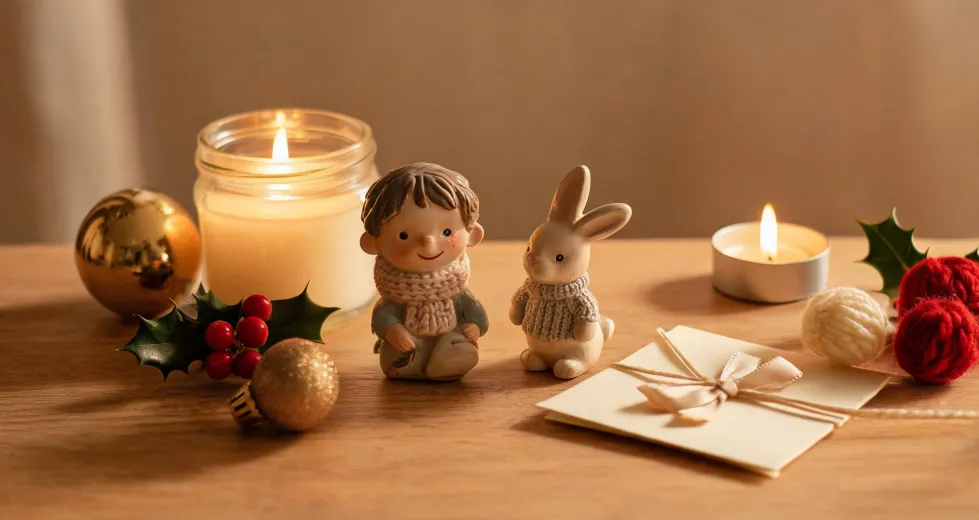
This is where collectible and licensed products can earn their keep. A corporate gift like an Enesco bride figurine for a wedding-industry client, an Enesco unicorn figurine for a family-focused brand, or a personalized Christmas ornament for a long-term account can sit on a desk or shelf for years. That's not a one-time impression. It's a repeated reminder of your company.
In 2022, I ordered 40 generic branded power banks for key accounts. Cost was $1,200. We got polite thank-yous and almost no follow-up conversations. The next year, we switched to personalized Enesco ornaments for the top 25 clients. Cost was similar. We got 6 direct replies, 2 referrals, and one client asked to order more for their own team. Same budget, different outcome.
It's tempting to think ROI is just cost per impression. But for relationship gifts, the better metric is cost per meaningful conversation. A gift that gets displayed or regifted keeps working.
Honest limitation: If you need 5,000 units for a trade show giveaway, collectible figurines and ornaments are not the right fit. They're too expensive per unit, heavier to ship, and often too fragile for bulk handling. For that scenario, go to Scenario B.
Scenario B: Broad-reach brand awareness (high volume, low cost)
You're at a conference, trade show, campus event, or public activation. You need many units. The goal is visibility, booth traffic, or top-of-mind recall. Cost per unit matters, but so does whether people actually keep the item.
Practical products usually win here: totes, notebooks, pens, drinkware, tech accessories, and other items people use daily. The best ROI comes from the item that survives the trip home and gets used, not the one with the lowest sticker price.
I went back and forth between $1.50 stylus pens and $3.80 insulated tumblers for a 2,000-person event. The stylus offered more units for the budget. The tumbler offered keepability. I chose the tumbler because we needed qualified leads, not just volume. We ended up with fewer leftovers and more badge scans. The stylus might have been fine if our only goal was name recognition. It wasn't.
The 'always pick the least expensive item' advice ignores the landfill factor. A cheap item that gets thrown away has an ROI of zero—plus a small brand negative. A slightly more expensive item that stays in circulation can beat it easily.
Honest limitation: If your budget is under $2 per unit and you need thousands of pieces, don't force a premium collectible into that box. Enesco-type products aren't designed for that scenario. Use them where they fit, or you'll burn budget and get weak results.
Scenario C: Employee recognition and milestone gifting
This is internal: anniversaries, retirements, onboarding, holiday gifts, and peer recognition. The audience is your own team. The ROI shows up in engagement, retention, and internal culture—not in lead counts.
Personalization changes perceived value fast. A Christmas ornament with an employee's name and hire date, a crystal gift for a retirement, or an Enesco figurine tied to a milestone can feel like a keepsake instead of a company logo drop.
In Q1 2024, we sent 120 generic branded hoodies as a thank-you. 18% were never picked up from the mailroom. A few months later, we tested 60 personalized Enesco ornaments for 5-year anniversaries. The pickup rate was 94%. Some employees displayed them at their desks. The lesson: personalization beats generic branding when the goal is recognition.
Looking back, I should have segmented by tenure earlier. At the time, I wanted one order for simplicity. Simplicity felt efficient. It wasn't. The generic order was cheaper per unit, but the recognition value was lower.
Honest limitation: If your workforce is fully remote and scattered, fragile collectibles can create shipping headaches. Consider whether a more durable home fragrance or crystal gift fits your logistics. And if your team is spread across different cultures or beliefs, a Christmas-specific ornament may not be inclusive. A neutral collectible or a donation option can work better.
Scenario D: Seasonal and holiday client retention
This is the Q4 thank-you, the holiday gift, the end-of-year touchpoint. The goal is to stay visible, express appreciation, and maybe prompt a renewal conversation. Volume is usually moderate—50 to 500 recipients.
Seasonal products have a natural reason to exist. A Christmas ornament is easy to send, easy to display, and often kept. Licensed collectibles like Enesco unicorn figurines or bride figurines can work if the recipient already collects that category or has a personal connection to the character.
The surprise wasn't the price difference. It was how many clients photographed the ornament and shared it internally. A $28 personalized ornament generated more internal visibility at one client than a $45 branded tech item we'd sent the year before. People don't photograph power banks. They photograph keepsakes.
I have mixed feelings about holiday gifting ROI. On one hand, it's hard to tie a single ornament to a renewal. On the other hand, retention is often about staying top-of-mind during the decision window. A seasonal gift does that without a sales pitch.
Honest limitation: If your clients don't celebrate Christmas, or if your industry has strict gift compliance rules, skip the ornament. Don't force a holiday theme. Use a neutral home fragrance, a crystal gift, or a charitable contribution in their name.
How to know which scenario you're in
Ask four questions before you order anything:
- What action do you want? A referral? A booth visit? An employee smile? A renewal? Different actions need different products.
- What's your cost per recipient ceiling? Under $5 is a different world from $25–$60. Don't shop outside your lane.
- How will it be delivered? Handed out at an event, mailed to an office, or distributed internally? Shipping and fragility matter.
- What will the recipient do with it after? Use it daily, display it, regift it, or toss it? The answer predicts ROI better than the product category.
Here's the quick judgment guide:
- 1,000+ units, under $5 each, awareness goal: practical promo items. Skip collectibles.
- Under 300 units, $15–$60 each, relationship goal: Enesco collectibles, personalized ornaments, or a premium corporate gift.
- Internal recognition: personalized keepsakes. A Christmas ornament or figurine can outperform generic apparel.
- Seasonal client retention: Christmas ornament, home fragrance, or licensed collectible—if it fits the recipient's culture and compliance rules.
According to PPAI's promotional products category framework (ppai.org), products should be selected by objective—awareness, relationship building, recognition, or retention. The ROI metric changes with the objective. Verify current guidance at ppai.org.
If a vendor tells you one product has the best ROI for every situation, that's a red flag. No single item wins everywhere. The best ROI comes from matching the product to the scenario, then measuring the right thing.
For Enesco-style collectibles, the ROI is strongest when the recipient already loves the brand or character, or when personalization turns the item into a keepsake. For mass awareness, go practical. For key relationships and recognition, go meaningful. That's the honest answer to which promotional products provide the best ROI.

Elise Laurent
Elise Laurent is a crystal and decorative glass quality analyst covering crystal figurines, vases, ornaments, suncatchers, and gift glassware. She examines ISO 6486-1 where food-contact glass dinnerware applies, then uses polarized strain inspection, dimensional checks, surface-defect grading, and refractive clarity to compare decorative pieces outside that scope. Her work helps sourcing teams choose materials, finishing routes, and protective packaging without confusing visual brilliance with verified durability.
Start a gift conversation