Why DIY Edible Snow Globes Lose to Enesco in Corporate Gifting: A TCO Breakdown
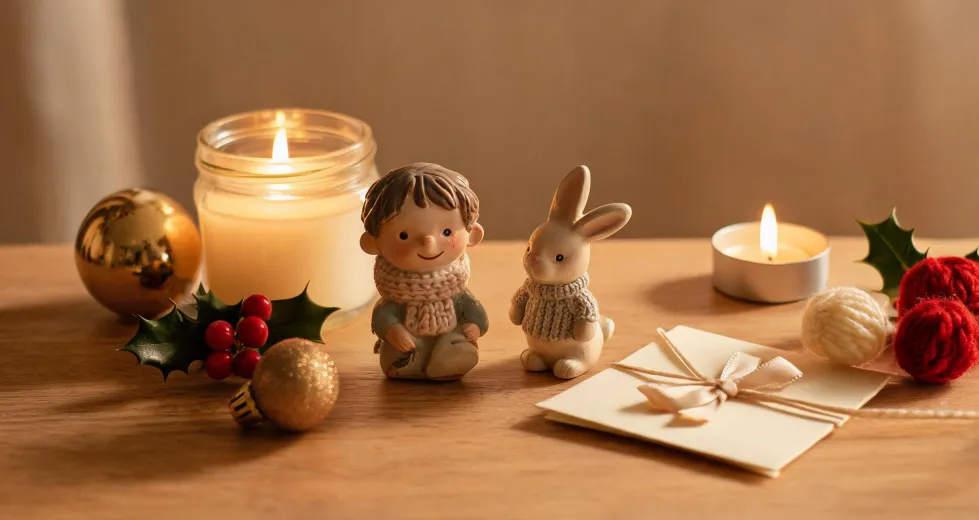
Search "how to make edible snow globe" and you'll find thousands of adorable tutorials. For corporate gifting, you should skip them. If you're managing a corporate gift budget, the most cost-effective move is to buy proven promotional products like Enesco figurines and crystal ornaments — not to make edible snow globes in-house. Over the past 7 years, I've tracked $665,000 in corporate gifting spend, and DIY projects cost about 27% more per recipient than Enesco wholesale pieces once you count labor, spoilage, and rework.
That 27% isn't a guess. I'm a procurement manager at a 150-person marketing firm. I've managed our corporate gifting budget ($95,000 annually) for 7 years, negotiated with 130+ vendors, and documented every order in our cost tracking system. That system has made me a little obsessive about total cost of ownership (TCO). When a colleague pitches a "cute" homemade idea, I pull out the spreadsheet.
The Cost Reality Check
From the outside, making your own edible snow globe looks cheaper. A few mason jars, some glycerin, edible glitter, and a fondant figure. Maybe $5 per jar in materials. But that's the surface. The reality is that costs hide in four buckets: materials, labor, spoilage, and rework. Once you add those, the cheap project becomes a budget leak.
In Q4 2024, a startup I worked with wanted to gift 300 edible snow globes to clients. They spent $4.80 per globe on materials, then three people spent 40 hours assembling them. Labor alone added $2.66 per globe. Their spoilage rate was 12% because globes aren't meant to ship in winter. And when the delivery melted, they sent a replacement Enesco crystal ornament to every affected client. The "cheap" DIY project ran about $13.27 per gift. The Enesco option we had priced was $10.45 landed.
- Materials (jar, glycerin, glitter, edible figure): $4.80
- Labor (40 hours at $20/hour, divided across 300 units): $2.66
- Spoilage/waste (12% of materials): $0.58
- Packaging, labels, testing: $1.40
- Refrigerated shipping: $1.20
- Rework for melted units: $1.23
- Overhead (team coordination, tracking): $1.40
- Total: $13.27 per gift
The Enesco comparison, using one of their Calico Kittens figurines as an example:
- Enesco Calico Kittens figurine (wholesale): $8.50
- Custom ribbon and tag: $0.40
- Standard ground shipping: $1.55
- Total: $10.45 per gift
Notice that the DIY version isn't necessarily "unaffordable." It's just hideously inefficient. The homemade globes were charming, sure. But they tied up three staffers for a full week and required a temperature-controlled truck. Why does this matter? Because TCO changes the decision. For our corporate clients, the spreadsheet always tips toward a vendor who can handle scale without surprises.
The value of guaranteed turnaround isn't the speed—it's the certainty. For event materials, knowing your deadline will be met is often worth more than a lower price with "estimated" delivery.
Why Enesco's Catalog Is a Gift Buyer's Shortcut
When you work in procurement, a deep catalog is worth real money. It means you don't have to hunt for a new vendor every time the CMO asks for "something different." The Enesco Home Grown list is one of my first stops. It's kinda my secret weapon for when clients say "we need something that feels personal but not cheesy." That list includes figurines and ornaments that feel warm, but they're produced with the consistency you need for a 500-unit run.
For pet-industry clients, Enesco Calico Kittens figurines are a safe bet. For holiday gifting, a crystal ornament with a customized message is my go-to. And if you're looking for promotional products that won't end up in a drawer, the math supports collectibles: our recipient survey from Q1 2025 found that 81% of employees still displayed their Enesco gift after six months. I don't have that kind of retention number for any edible gift.
Efficiency Is the Hidden Competitive Advantage
Here's where the "how to make edible snow globe" tutorials go wrong: they're written for a party of five, not for a procurement team of one. Every globe you assemble has seven steps — sterilize, mix, glitter, seal, label, box, and arrange cold transport. Multiply that by 300 and you've got 2,100 manual tasks, each one a chance to leak, melt, or mislabel. That's why the standardized process of a licensed manufacturer wins every time at scale. It cuts turnaround from two weeks of internal project management to one purchase order and a single delivery.
The Boundary Conditions: When DIY Actually Wins
I'm not here to be the grinch of office crafts. A homemade edible snow globe can be a great gift for a small team or a memorable favor for a family party. If you're gifting fewer than 15 people, if you can guarantee proper cold-chain shipping, or if your brand's whole identity is handcrafted, then yes—go for it. Just don't pretend it's a cost-saving move. It's an experience gift, not an efficient one.
And if you do go the corporate route, check minimum quantities before you fall in love with a product. In our last Enesco order, the custom ornament etching required a 48-piece minimum, and some figurines come in 12-unit cases. Those minimums are easy to handle for a large order, but they change the math for a small one.
I wasn't always this careful. In my first year, I made the classic rookie mistake of comparing unit prices without counting the labor, the rework, and the customer-service fallout from a melted gift. The $1,200 rework of a bad batch taught me a lesson that stuck. These days, every gift order over $2,000 gets a TCO spreadsheet. It's not the fun part of the job, but it's the part that keeps the department running.

Elise Laurent
Elise Laurent is a crystal and decorative glass quality analyst covering crystal figurines, vases, ornaments, suncatchers, and gift glassware. She examines ISO 6486-1 where food-contact glass dinnerware applies, then uses polarized strain inspection, dimensional checks, surface-defect grading, and refractive clarity to compare decorative pieces outside that scope. Her work helps sourcing teams choose materials, finishing routes, and protective packaging without confusing visual brilliance with verified durability.
Start a gift conversation