Are Enesco Figurines Valuable? What a $4,200 Corporate Gift Budget Taught Me
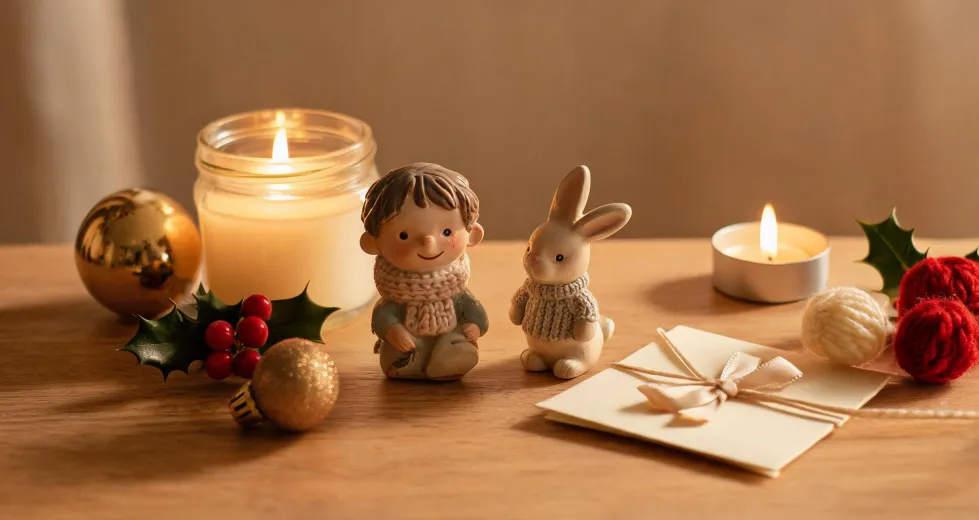
The Assignment
Last September, our CEO dropped a folder on my desk. 'We lost two accounts this year, and the feedback was the same: our gifts felt like branded junk.' Inside the folder was a one-line budget: $4,200 for 120 client gifts. I'm a procurement manager at a 35-person B2B marketing agency. I have tracked every dollar we spend on client recognition for six years. The line item didn't scare me. The judgment did.
We had to make 120 people feel remembered. Not 'swagged.' Remembered.
The Search
I requested quotes from three sources. One was a premium corporate gift supplier. One was a local independent shop. The third carried Enesco. I almost skipped that quote because my mental image of Enesco was 'collectible figurines on grandma's shelf.' That's not wrong, but it's incomplete. Enesco works with licensed lines that include Disney ornaments, Harry Potter snow globes, collectible figurines, home fragrance, and personalized gift options.
Then I made a classic rookie mistake: I started comparing unit prices before defining the actual cost.
Are Enesco Figurines Valuable? It Depends
Before I shortlisted any snow globe, I searched 'are enesco figurines valuable' because one of our long-time clients collects Christmas ornaments and I didn't want to send her something that would make her roll her eyes.
Here's what I found. Some Enesco pieces do appreciate—usually retired limited editions, discontinued Cherished Teddies, or older licensed pieces with original packaging. But most current products are made in large quantities and are worth roughly what someone pays at retail. Maybe less. 'Collectible' doesn't automatically mean 'investment.' I checked actual sold listings on eBay in April 2025, not asking prices. The range was wide: a few retired pieces went for multiples of their original price, while most sat closer to $10–25.
For our purposes, 'valuable' meant something different: a gift a client would keep, use, and remember. That favors quality and personalization, not scarcity.
The Quote That Made Me Build a Spreadsheet
We compared two Enesco-based options:
- 12 Harry Potter snow globes for our top accounts. Beautiful, officially licensed, $34.90 each before shipping. Add protective packaging and a custom card, and each one landed around $38.50.
- 120 personalized ornaments for the broader list. The ornament itself was $9.80. Personalization added $3.60. A rigid gift box and a thank-you card brought the unit cost to around $15.25.
Here's the thing: unit price isn't the price. The ornaments needed a setup fee for logo printing, though it was waived because we ordered over 100 units. The snow globes needed a 5% breakage reserve because they were glass. The ornaments shipped flat in a light box for $85. The snow globes would have shipped in heavy cartons, adding another $120.
I built a total-cost-of-ownership spreadsheet. A full order of 120 snow globes would have blown through our budget before we paid for gift cards. The ornaments left room for 12 snow globes and still stayed under $2,400. The rest stayed in reserve for a variable I didn't see coming.
Why Personalization Won
A personalized gift does more work than an expensive generic one. An ornament with the client's last name and our company's small logo says 'we actually kept a list' instead of 'we have a warehouse.' It also feels less like vendor swag. Our sales team loved that their accounts could hang it on their Christmas tree without hiding our logo.
Enesco offered a clean personalization workflow, and the quote included a proof before production. I approved the proof. The proof was correct. That is important for later.
Is Reed Diffuser Safe for Cats? Probably Not
We almost added a mini reed diffuser to each gift box. Enesco's home fragrance line is nice, and the price was low enough to include without much TCO pain. Then I remembered a note in our CRM: one of our biggest clients has three cats. So I Googled 'is reed diffuser safe for cats' and fell down a rabbit hole.
The short answer: generally no. Many reed diffusers use essential oils, and several common ones—tea tree, eucalyptus, citrus, cinnamon, pine, wintergreen, ylang-ylang—are considered toxic to cats. Cats don't metabolize these compounds the way humans or dogs do. Even if the bottle is on a shelf, oil can settle on their fur and end up in their stomach while they groom. The ASPCA's poison control database includes reports of essential oil exposure in cats, and the consistent advice is to avoid airborne fragrances around them.
I dropped the reed diffuser idea. A gift that makes a client's cat sick is not a gift. It's a liability. If you're considering Enesco home fragrance for a recipient with pets, check the ingredient list, avoid essential oils flagged by veterinary sources, and tell the client to place it in a ventilated space the cat cannot access. Honestly, I'd rather skip fragrance entirely than guess.
The Name Incident
The ornaments arrived on time. The first sample was perfect. Then my assistant opened a second box and said, 'Did we really have a client named Sara without an h?'
We had three Sarahs on the list. Two came out as Sara. Then we found a 'Jon' instead of 'Jonathan' and a 'Katelyn' facing an existential crisis. The problem wasn't Enesco. The problem was my exported CSV. One sales rep had typed client names in a notes column during the handoff, and I never cleaned the data. I knew I should have run a final check against the CRM. But it was late, the order was due, and I thought, 'what are the odds?' That was the one time the odds mattered.
The cost of fixing it was about $700 for 40 rush reorders, plus expedited shipping for the second wave. Not the vendor's fault. My fault. But here's the TCO lesson: a data error is a cost line, just like shipping or setup fees. We kept the corrected CSV in two places. (Finally learned that one.)
The Result
Wave one went out on time. Wave two went out four days later with a hand-signed apology card from the account executive. One delayed client sent our CEO a photo of the ornament on her tree and said it was worth the wait. The snow globes went to our twelve largest accounts. One client's assistant told our sales rep that the Harry Potter snow globe sat on the CFO's desk, not under a tree.
Were the Enesco figurines 'valuable'? Not in the investment sense. But as a tool for maintaining client relationships, the value clearly exceeded the unit cost. We ended up around $3,100 all-in, leaving roughly $1,100 in reserve. That's unusual. The buffer came from TCO decisions, not luck.
What I'd Do Differently
My experience is based on one 120-unit corporate gift order through an Enesco vendor. If you're buying for a museum gift shop, a wedding, or a serious collector, your calculation will look different. I can't speak to the fine-art side of the collectible market.
Still, the rules I'd reuse:
- Calculate total cost, not unit cost. Include packaging, shipping, breakage, and the time required to fix mistakes.
- Personalization is worth paying for, but only if your data is clean. Build a verification step before you approve production.
- Check pet safety before sending home fragrance products. 'Natural' does not mean 'cat-safe.'
- If a product is called 'valuable,' ask who says so and what it actually sells for—not what someone lists it for.
I'm still not entirely sure why our vendor didn't flag the duplicate 'Sara' issue. My best guess is their system uses the exact text we provide and assumes we know our clients. That's fair. Now we act like it.
In the end, the Enesco Harry Potter snow globe was the emotional home run. The personalized ornaments did the relationship work. The reed diffuser stayed in the warehouse. And the spreadsheet earned its keep.
That's the version of 'valuable' I can explain to our CFO.

Elise Laurent
Elise Laurent is a crystal and decorative glass quality analyst covering crystal figurines, vases, ornaments, suncatchers, and gift glassware. She examines ISO 6486-1 where food-contact glass dinnerware applies, then uses polarized strain inspection, dimensional checks, surface-defect grading, and refractive clarity to compare decorative pieces outside that scope. Her work helps sourcing teams choose materials, finishing routes, and protective packaging without confusing visual brilliance with verified durability.
Start a gift conversation