Enesco Figurines, Snow Globes, and Corporate Gifts: A Procurement Manager's Honest Take
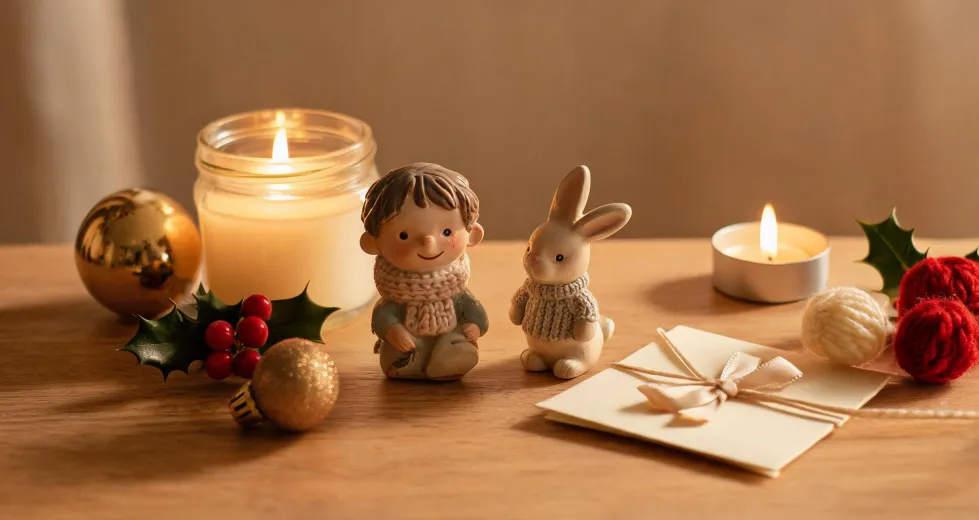
Unit price is the least reliable number in a corporate gift order. I learned that the hard way, and every procurement spreadsheet since has only confirmed it. For Enesco figurines—including Enesco Home Grown figurines, Enesco figurines vintage, glass figurine orders, crystal ornament choices, even snow globes—the real cost sits in shipping fragility, material claims, and the vendor's willingness to say what they don't do.
Here's the thing: stop starting with 'what's the cheapest per-piece quote?' Start with 'what exactly am I buying, who's responsible if it arrives broken, and what does the total cost look like after packing, shipping, and replacement?'
I've been managing our company's gifting and promotional budget for seven years. That's $315,000 in cumulative spend, documented in our cost tracking system. It's not a giant budget, but it's enough that mistakes show up in the profit and loss.
The Conclusion: Unit Price Is Not Total Cost
On paper, this sounds obvious. In practice, buyers still get caught by the gap between the quote and the invoice. Let me give you a real example from 2024.
We needed 350 glass figurines for a client appreciation campaign. Vendor A quoted $12.50 each, all-in. Vendor B quoted $9.80 each, plus 'standard packaging.' I almost signed with B. Then I calculated total cost:
- Vendor B: $9.80 × 350 = $3,430
- Fragile-item packaging: $0.90 each = $315
- Packing labor: $130
- Expected breakage without upgraded cushioning: estimated 4% = ~$480 in replacement shipments
- Total: roughly $4,355
Vendor A was $4,375. The 'cheap' option was twenty dollars less. That's not a win. That's risk without reward.
The deeper issue? I had to estimate breakage because Vendor B couldn't give me a number. A supplier who doesn't know their own damage rate is a red flag.
What I Learned After 200+ Orders
It took me about three years and 200 orders to understand that vendor relationships matter more than vendor capabilities. That sounds soft for a cost-controller. It's not.
The trigger was a Q2 2024 order of Enesco nativity sets. We'd bought from the same wholesaler for years. They asked if we wanted 'expedited shipping.' I said no, because we had a week. The sets arrived in time, but three bases were cracked. The supplier said the damage happened in transit and pointed to the carrier. The carrier said the packaging was inadequate. Neither accepted the cost. I ended up eating the replacement charge because I hadn't specified protective corner bracing in writing.
That $240 mistake changed my purchasing policy.
Now, every fragile gift order includes a written packaging specification and a clear point of responsibility. Not 'standard packaging.' A spec: double-wall box, foam insert, breakage allowance. Simple.
The 'Crystal' vs. 'Glass' Trap
Let's talk about the difference between a glass figurine and a crystal ornament, because the words are not interchangeable in procurement.
I assumed 'crystal ornament' meant actual lead crystal. Didn't verify. Turned out the vendor used 'crystal' as a market term for clear glass with high shine. That's not necessarily illegal, but it's misleading if you're paying a crystal premium and delivering glass to a client who knows the difference.
Per FTC advertising guidelines, claims have to be truthful and substantiated. So when a supplier says 'crystal,' I now ask: what's the material spec? Is it lead-free crystal, soda-lime glass, or something else? If they can't produce a spec sheet, that tells me something.
For Enesco crystal ornaments, the same rule applies. You're not just buying a look. You're buying a material promise. And that promise has to be documented before you issue a PO.
Enesco Figurines Vintage: Worth It Only If You Verify
Enesco figurines vintage are a different animal. They're collectible, which means the market price has a story attached to it—age, condition, rarity, original packaging.
Searching 'Enesco figurines vintage' pulls up pieces with wildly different conditions. That phrase is a search shortcut, not a product spec.
For corporate gifts, vintage pieces can be memorable. But they can also be a procurement headache.
The first rule: if a vendor listing says 'vintage Enesco figurine,' ask for provenance or at least a detailed condition description. A figurine with a repaired chip is not the same as one in mint condition. The difference can be $50. Or $200. Depends on the piece and the buyer.
Second rule: understand your audience. A vintage Enesco Home Grown figurine may charm a longtime collector, but it might confuse a younger client who's never seen the collection. That doesn't make it a bad gift. It makes it a targeted one.
Third rule: don't buy vintage without a return policy. I've seen 'as-is' listings that were really 'as-damaged.' You don't want that surprise in a client's hands.
So, What's a Snow Globe?
Let's answer the basic question directly. A snow globe is a transparent sphere, usually glass, filled with liquid and floating snow particles that swirl when shaken. Inside the sphere is a scene—often a miniature figurine, building, or holiday motif. The globe sits on a base that may include a music box, a motor, or just a decorative finish.
From a buying perspective, snow globes have a hidden cost profile. The liquid can leak. The seal can fail. The glass can break. And because they contain liquid, shipping costs are not the same as shipping a solid figurine.
According to USPS pricing effective January 2025 (usps.com/stamps), a First-Class Mail letter costs $0.73 and a large envelope costs $1.50. Neither of those rates ships a snow globe. You're paying package rates, plus dimensional weight. That's not a hidden fee. It's a line item people forget when they compare per-unit prices.
I've sat on more than one call where a buyer ordered 500 snow globes based on product cost, then choked on the freight quote. The freight isn't a surprise. It's part of the product.
Specialists vs. 'We Can Do Everything' Vendors
Here's a procurement principle I now trust: a supplier who says 'this isn't our strength' is worth more than one who says 'we can handle it all.'
A few years ago, I needed a mixed order—collectible figurines, crystal ornaments, and branded promotional products. One vendor pitched me an end-to-end solution. The quote looked fine. But when I asked about their experience with fragile, liquid-filled snow globes, their answer was vague. No damage stats. No packaging specs. No clear escalation path.
I split the order instead. That cost me extra management time, but it saved me a likely headache. The vendor who said 'we don't do snow globes well—here's someone who does' earned my trust for everything else.
That's the expertise boundary principle. Being clear about what you don't do is a feature, not a flaw. I'd rather work with a specialist who knows their limits than a generalist who overpromises.
What This Means for Your Next Gift Order
The best time to catch a cost problem is before the PO goes out. The second-best time is now, while you're still reading.
Before you order Enesco figurines—new, Home Grown, or vintage—ask these five questions:
- What is the exact material? Glass, crystal, porcelain, resin?
- What packaging will be used? Get it in writing.
- Who pays for breakage? The shipper, the vendor, or you?
- What's the full landed cost, including freight, insurance, and replacement?
- What does the vendor do exceptionally well? And what do they not do?
I don't have a single answer for 'the best corporate gift.' I do have a process. And after seven years, I trust the process more than I trust a low quote.
That's the honest truth. It took me a cracked nativity set and a $450 hidden-fee incident to learn it. You don't have to repeat my mistakes.

Elise Laurent
Elise Laurent is a crystal and decorative glass quality analyst covering crystal figurines, vases, ornaments, suncatchers, and gift glassware. She examines ISO 6486-1 where food-contact glass dinnerware applies, then uses polarized strain inspection, dimensional checks, surface-defect grading, and refractive clarity to compare decorative pieces outside that scope. Her work helps sourcing teams choose materials, finishing routes, and protective packaging without confusing visual brilliance with verified durability.
Start a gift conversation