Why Cheap Corporate Gifts Are the Most Expensive Thing You'll Ever Hand Out
Here's a take that might make me unpopular at the next industry conference: cheap corporate gifts are the most expensive thing you'll ever hand out.
I say that as someone who buys them for a living. I'm an office administrator for a 200-person financial firm in the Midwest. I manage all our corporate gifting and promotional ordering—roughly $40,000 a year across eight vendors, processing 60 to 80 orders annually. I report to both operations and finance, so I see the real cost of every decision, not just the one on the invoice. And after five years of doing this, I can tell you the pattern isn't subtle.
Cheap gifts disappear. Quality gifts stay. And a gift that stays is the only one actually doing its job.
A Gift's Real Cost Is Its Shelf Life
When I took over purchasing in 2020, the first thing I did was audit our gifting history. I walked around the office and asked people what gifts we had given clients in recent years that they remembered. That they still had.
Crickets.
The logo mugs? Gone. The branded tech gadgets we ordered for the 2022 holiday season? A box of them surfaced during an office reorganization last spring, still sealed.
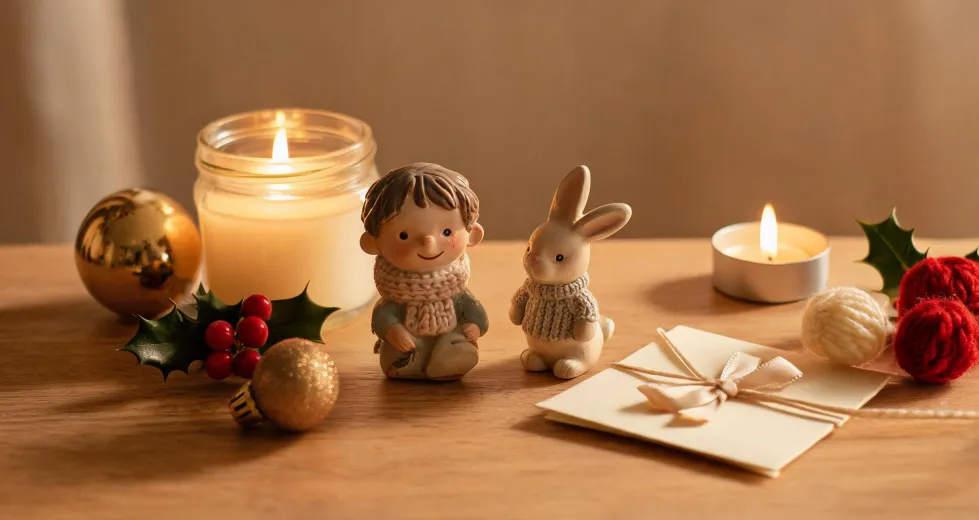
But here's what changed my mind. In 2024, we gave our long-term clients a small batch of Enesco Wizard of Oz figurines. Not a huge order—sixty pieces, chosen deliberately because they're the kind of thing people display. A Dorothy figurine on a CPA's bookshelf. A Cowardly Lion on a dentist's counter. People who love that movie don't file the figurine in a drawer; they put it somewhere they can see it.
A year later, clients still mention those gifts. They remember who sent them and why. You can't say that about a pen with a logo on it.
Cheap Gifts Create Expensive Work
Here's the part I wish more budget owners would model out before signing off on the cheapest quote: a broken cheap gift isn't a $12 loss. It's $12 plus a replacement plus a credit memo plus an annoyed recipient plus a chunk of your administrator's time.
I learned this the hard way in 2023. We ordered 200 budget ornaments from a new vendor for a client holiday event. Forty arrived chipped. The vendor's return process was a nightmare—handwritten receipts, no tracking, and a six-week wait for replacement stock. Finance rejected the expense report because the documentation didn't meet our invoicing standards; about $2,400 in unsubstantiated gift costs landed on our department's budget. We also showed up at the client event with twenty-two gift boxes missing ornaments, and a vendor relationship that was not exactly strategic.
Not ideal. Embarrassing, actually.
Last season, I switched to porcelain figurines from Enesco. Each piece arrived individually wrapped, packed properly, with a branded box and, where applicable, authenticity documentation. Zero breakage. Zero follow-up emails. So glad I asked for the packaging specs before that order shipped—one quick email saved us from reliving 2023. The switch cut our December gifting workflow from three weeks to five days.
That's not just quality. That's efficiency.
Recipients Notice the Difference
Nobody likes admitting this, but recipients judge you by the gift. They do. I've been on the receiving end of enough generic corporate swag to know how it feels.
It's tempting to think the gesture alone matters—that any gift says we're thinking of you. But that oversimplification ignores a basic truth: people can smell a bulk order from a mile away, and they feel the difference between we picked this for you and we ordered whatever was cheapest per unit.
One of our best moves last year was giving Enesco All That Jazz figurines to department heads and long-tenured staff. The All That Jazz line is full of personality. We matched each figurine to the person—the golfer, the dog lover, the one who's always dancing at office parties. One manager told me it was the first gift in years that didn't end up in a closet.
Do I have hard data proving this improved retention? No. What I can say anecdotally is that the people who received those gifts are still here, and the ones who got the generic gift sets are the same ones who say they feel underappreciated. Make of that what you will.
And Yes, the Nativity Question
Every fall, someone asks me: how do I set up a nativity scene? Usually it's a client who wants to order nativity sets for a church donation, a school auction, or a retiring pastor.
Let me stop right here and say I'm not a theologian. I can't speak to the religious traditions around the placement of each figure—that gets into territory that isn't my expertise. But from a procurement perspective, here's what I know:
- Count everything. Nativity sets vary wildly in piece count, from simple five-piece sets to elaborate ones with dozens of figures. Missing pieces are the number one complaint we hear from recipients.
- Check the packaging specs. Porcelain nativity pieces are heavier than they look. Without proper packing, you're delivering broken shepherds before Christmas.
- Ask for a display guide. Quality suppliers include a diagram showing how the scene goes together. The classic arrangement puts the manger at the center, Mary and Joseph close by, shepherds and animals gathered around, and the Magi approaching from the side. Pass that guide along to the recipient and you've saved them the guesswork.
A well-made nativity set becomes the centerpiece of a family's holiday season, year after year. It has the same shelf life I was talking about. The cheap plastic ones? By January, they're in the giveaway pile.
But My Budget...
I hear the objection forming: Easy for you to say. My gifting budget barely covers branded pens.
Honestly? Fair. But I'm not arguing for luxury gifts. I'm arguing for the gap between trinket and keepsake. And that gap is much smaller than people think.
Enesco's catalog runs broad—home fragrance products, mid-range collectible lines, corporate gift options. This spring, we put together mid-year appreciation boxes with a small home fragrance item plus a handwritten note. Clients actually told us they used them. A couple asked where we sourced them. That's a gift doing its job.
Pricing reference: wholesale porcelain figurines typically run $18–$75+ depending on size, license, and finish (based on our 2024 vendor quotes; verify current pricing with your supplier).
The per-unit gap between cheap and quality is often only ten or fifteen dollars. That's a small price to pay for a gift that actually gets kept. And it's a very expensive way to save money when it doesn't.
Bottom Line
So here's my position, and I'm sticking with it: the most efficient gift is the one that stays.
It stays on the desk, the mantel, the shelf. It keeps your name in front of your client long after the holiday season ends. It says you saw them as people, not as accounts.
Next time you're comparing a $12 trinket against a $40 porcelain figurine, ask yourself which one is still sitting there in five years.
I know my answer.

Elise Laurent
Elise Laurent is a crystal and decorative glass quality analyst covering crystal figurines, vases, ornaments, suncatchers, and gift glassware. She examines ISO 6486-1 where food-contact glass dinnerware applies, then uses polarized strain inspection, dimensional checks, surface-defect grading, and refractive clarity to compare decorative pieces outside that scope. Her work helps sourcing teams choose materials, finishing routes, and protective packaging without confusing visual brilliance with verified durability.
Start a gift conversation