I Wasted $31,000 on Failed Corporate Gift Orders—Here's What Actually Goes Wrong
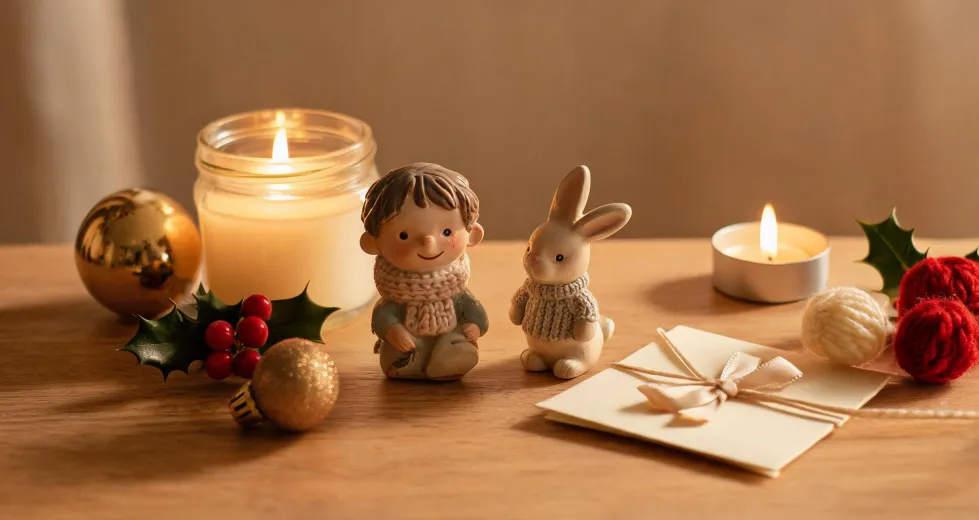
In September 2022, I submitted a $4,700 purchase order for 150 Christmas ornaments for a client's dealer appreciation event. It looked like a routine order. Enesco, branded packaging, we'd done similar things before. The client approved the mockup. I approved the proof. We processed it in a day.
When the cartons arrived, the client opened the first one and immediately hit pause. The ornaments were beautiful. The packaging was untouched. But we'd never flagged that the hooks were packed separately—a loose bag of 150 metal hooks sitting on top of a stack of ornament boxes. The client expected ready-to-hang. Nobody verified because nobody'd ever had to. That's the thing about corporate gift disasters: they look like communication failures, but ninety percent of the time, they're knowledge gaps in disguise.
The ornaments sat in a conference room for three days while we sourced replacement hooks. It cost $380 in expedited shipping, 12 internal hours, and one very annoyed client who'd already told their leadership the gifts were done.
And that was nowhere near my most expensive mistake.
The problem I kept blaming: "Vendor errors"
For years, I logged every order failure as a vendor issue. Wrong item. Misprinted detail. Damaged box. Delayed arrival. I'd file an incident report, get a credit or replacement, and move on. But two things kept bothering me. First, the same categories of problems kept recurring in different shapes. Second—and this was harder to admit—most of those "vendor errors" weren't vendor errors at all. They were my assumptions colliding with product realities.
I knew I should have been doing sample checks and component verification, but I thought "what are the odds?" Well, the odds caught up with me. Twenty-three times over eight years, to be exact.
The deeper problem: product knowledge gaps look like vendor failures
When I started documenting patterns instead of incidents, the real picture emerged. Vendor mistakes happen, sure. But the expensive, relationship-damaging failures came from three knowledge gaps that gift buyers rarely talk about.
"You don't understand the product, so you can't spec it properly—and then you blame the vendor when it's wrong."
Licensing isn't a legal formality—it's a constraint map
Take the Enesco Facets Kuromi figurine, for example. It's one of our most-requested licensed items, and I understand why. The faceted crystal design catches light in a way photos just don't do justice to, the Sanrio character recognition does the heavy lifting, and it sits on a desk without taking over the whole workspace. As a corporate gift, it lands well with younger employees and clients.
But licensed product lines come with usage rules that retail buyers never think about. A client asked if we could engrave the base of the Kuromi figurine with their company logo. I knew enough to check the licensing terms before promising anything. The answer was no—modification isn't covered by standard merchandise licensing (i.e., the product ships as designed; the license doesn't extend to alterations). We caught it before production, but the client's quote approval took two days longer than expected, and they didn't love that.
That was a cheap lesson. I don't have hard data on how many promotional distributors skip that check, but based on eight years of orders, my sense is it's most of them—and they only find out after telling the client "yes, we can do that."
"It looked bigger in the photo"—the vase problem
In spring 2024, I ordered 75 glass vases from Enesco's home decor range for a real estate firm's client appreciation event. I read the product page. I noted the dimensions: 10.5 inches tall. But I never physically handled the vase, and I didn't think about what 10.5 inches looks like in a real context—next to a wine bottle, on a conference table, in a wide-angle event photo.
The vases arrived and they were, genuinely, lovely. They were also, unfortunately, visually quiet. The client had envisioned something commanding. What arrived was elegant but modest. Nobody complained outright, but I saw the event photos afterward, and the vases basically disappeared into the table settings.
What I should have done: ordered a sample, placed it in a real context, and photographed it. We've since caught 47 potential mismatches using that exact approach—where product dimensions or proportions didn't match the client's mental image.
That mistake probably cost us the follow-up contract. I wish I had tracked that outcome more carefully. What I can say anecdotally is that the client's next event went to a different distributor.
The tea set trap: nobody checks what's inside the box
Here's a question that sounds kinda ridiculous until you've been burned by it: what does a tea set consist of?
Obvious answer: a teapot and cups. But does your set include saucers? A sugar bowl? A creamer? A serving tray? Are the cups wrapped individually, or do they sit in molded inserts that keep them safe in transit?
We ordered 25 tea sets for a boutique hotel chain that wanted to place them in guest suites as an amenity. The client asked, "Will these have everything we need?" I said, "A tea set is a tea set, right?" The listing said "12-piece set" and I didn't verify the breakdown. (Ugh.)
The sets included a teapot, six cups, and six saucers—but no creamer, no sugar bowl, and no tray. The hotel's premium suites were supposed to offer a complete tea service. Instead, guests got a pot and cups with no way to serve milk or sugar gracefully. The hotel staff had to source extra components at the last minute.
I still kick myself for that one. If I'd asked for the box contents breakdown—or opened a sample—I'd have caught it before committing. That mistake cost us a $6,200 order and a chunk of credibility that took two follow-up orders to rebuild. The fix, once we implemented it, took five minutes per order.
What the mistakes actually cost
Let me put real numbers on this. Across eight years of handling corporate gift orders, I've documented 23 significant mistakes totaling roughly $31,000 in wasted budget. That doesn't include the softer costs: the late-night apology emails, the tense follow-up calls, the two client relationships that ended over preventable product surprises.
The most frustrating incident was in Q1 2024, when we processed an order of 100 Enesco Home Grown pieces for a company's ten-year anniversary. Handcrafted style, rustic finishes, perfect for the brief. But I skipped the final verification step because we were rushing and "it's basically the same as last time." It wasn't. Our client had asked for a branded thank-you card inserted in each box, and we'd agreed to it without verifying the packing slot. It didn't exist. $400 in re-boxing, eight hours of overtime, one very frustrated account manager.
That's the pattern that finally clicked for me. Every one of those 23 mistakes was a failure to verify product reality before making promises. And every time, schedule pressure was the reason I skipped it.
There is something satisfying, though, about the moment the pattern clicks. After that 2024 incident, I built the pre-order checklist we now use, and it's caught 47 potential errors in 18 months. The best part: no more 3 a.m. worry sessions about whether the order will actually show up right. (Finally!)
The fix: a pre-flight checklist for corporate gift orders
I'm not going to oversell this. This worked for us, but our situation is specific—mid-sized B2B promo distributor, domestic orders, predictable volume. If you're dealing with international logistics or massive seasonal spikes, the calculus might be different.
That said, every Enesco order in our pipeline now requires written answers to six questions:
- Packaging: Does the item ship in its own branded box, a plain white box, or bulk-packed polybag? Is it gift-ready on arrival?
- Components: For multi-piece items (tea sets, glassware, ornament sets), request the full contents breakdown (component list, not just piece count) and compare it to what the client expects.
- Dimensions in context: For vases, decor, and tabletop items, order a physical sample and photograph it next to familiar objects. A 10.5-inch vase reads very differently in a product photo vs. a conference room.
- Licensing constraints: For licensed character products (Sanrio, Disney, Warner Bros.), confirm customization rules in writing before telling a client what's possible. If the answer is no, find out before you quote, not after.
- Accessories: Does a Christmas ornament come with a hook? Does a figurine include a gift box? Does a vase have a box suitable for gifting? None of this can be assumed—even two SKUs from the same collection can differ.
- Seasonality: For holiday orders, build 2–3 extra weeks into the timeline for design approval, production, and transit. The mistake isn't the delay—it's promising a timeline that doesn't include the approval cycle.
Six questions, fifteen minutes, one repeatable process. It's not fancy. But it has turned our Enesco order error rate from "inevitable" to "rare."
If you're a procurement manager or gift buyer, the question isn't whether you'll face a product knowledge gap—it's whether you'll discover it before the order ships or after the client opens the carton. The choice is usually embarrassingly simple: ask the dumb question, order the sample, open the box. Or keep paying tuition to the same school I attended.
I would rather you not join me.

Elise Laurent
Elise Laurent is a crystal and decorative glass quality analyst covering crystal figurines, vases, ornaments, suncatchers, and gift glassware. She examines ISO 6486-1 where food-contact glass dinnerware applies, then uses polarized strain inspection, dimensional checks, surface-defect grading, and refractive clarity to compare decorative pieces outside that scope. Her work helps sourcing teams choose materials, finishing routes, and protective packaging without confusing visual brilliance with verified durability.
Start a gift conversation