Enesco Ornaments, Tea Sets, and How to Make a Snow Globe With Water: A Field Guide
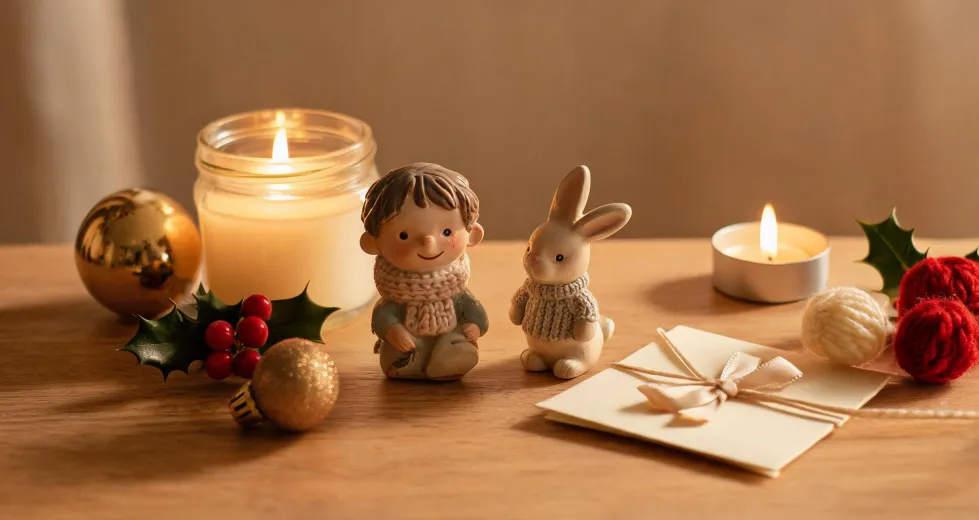
I've been handling corporate gift and promotional product orders for six years. I've personally made—and documented—four significant mistakes, totaling roughly $6,200 in wasted budget. That's why I keep a checklist now.
If you're trying to figure out whether to buy an Enesco ornament, a Home Grown by Enesco piece, an Enesco The Heart of Christmas tea set, or just researching how to make a snow globe with water, here's the thing: there's no single right answer. It depends on what you're trying to do. I'll break this into three scenarios.
Scenario 1: You're buying Enesco corporate gifts or promotional products
If you're a procurement person or marketing manager, you probably want something that looks thoughtful but still arrives in one piece. This is where Enesco is actually a strong fit: the brand has a wide range of licensed and house-brand products. I've ordered everything from branded ornaments to Home Grown by Enesco farmhouse decor for client appreciation.
What I've learned:
- Know your client's style before you pick an IP. A licensed character ornament can be a no-brainer for a consumer-facing brand, but it's a red flag if the client is a conservative law firm.
- Watch the lead time. Custom ornaments with personalization can take longer than people expect. As of early 2025, I'm planning six to eight weeks for custom ornament orders. If you need it sooner, ask about stocked items, but don't assume.
- Check color matching with Pantone, not a screen. Industry standard color tolerance is Delta E below 2 for brand-critical colors. If you don't ask for a Pantone reference at the proof stage, you're gambling.
- Respect the print file. If you're adding a printed insert or personalized label, commercial printing generally needs 300 DPI at final size. A 1000 x 1000 pixel image won't make a decent 8 x 10 insert.
My most expensive lesson: I approved a 350-piece ornament order with a logo color that looked fine on screen. It didn't match the client's brand blue. The reprint cost $2,800 plus a week of delay. I still kick myself for not requesting a physical proof.
That mistake added a rule to my team's checklist. Since then, the checklist has caught 47 potential errors in the past 18 months, or at least that's the number I've tracked. Every caught error sounds small until you multiply it by hundreds of units.
Home Grown by Enesco is a separate animal. It leans rustic, woodland, and farmhouse. That's great for a home decor brand or a lifestyle client. It's probably wrong for a finance firm's holiday thank-you gift. I'd rather order one sample piece than assume a category will work.
For holiday corporate gifting, Enesco The Heart of Christmas has a more traditional, nostalgic feel. If your client already collects Christmas ornaments, this is the safer route. If they see gifts as clutter, skip it and go with consumables.
And if you're in the 'unique gift' category but don't want fragile packaging, a tea set from Enesco is not the right call. It's delicate, heavy, and a pain to gift by mail. I've dealt with enough 'we need a replacement' emails after shipping ceramic teapots to say this with full confidence.
Scenario 2: You're buying for yourself or a collector
This is where I have to be honest: I'm not a ceramics engineer, so I can't speak to glaze chemistry. What I can tell you from ordering and un-boxing a lot of Enesco products is how to treat them after they arrive.
Ornaments and tea sets are display pieces first. The Heart of Christmas ceramic tea sets from Enesco I've handled are charming, but I'd never put one in the dishwasher. Even some pieces with a glossy finish can have hand-painted details that don't survive heat and detergent. Hand wash, dry immediately, display on a stable shelf.
If you're choosing between Home Grown by Enesco and Enesco The Heart of Christmas, think about the home it's going into. Home Grown is basically farmhouse charm: muted colors, nature motifs, slightly imperfect textures. Heart of Christmas is more polished and traditional. Neither is objectively better. They say different things on a mantel.
For ornaments, buy what you'll actually pull out every December. I once ordered a 12-piece set of lightweight ornaments for a client because they looked great in the catalog. Three arrived shattered. Not the factory's fault—shipping was rough. Now I order in smaller batches and ask for heavier packaging on anything ceramic or glass. A broken ornament costs more in credibility than it does in dollars.
When a piece survives shipping and looks better in person, there's something satisfying about that. After all the boxes and bubble wrap, it's the payoff.
If you're a serious collector, don't skip the care label. I'm not sure why some ceramic pieces last decades and others develop hairline cracks in normal conditions. My best guess is that temperature swings play a bigger role than people think. Keep favorites away from radiators and direct sun.
Scenario 3: You want to make a snow globe with water
This is the opposite of buying a finished product. It's also one of those DIY projects where people skip the one step that matters: the seal. I've taken apart enough leaking snow globes to know that a cute jar is not enough.
Here's how to make a snow globe with water that won't become a sad biology experiment:
- Use a clean glass jar with a metal or plastic lid. Avoid rust-prone caps. If you use metal, add a little petroleum jelly to the inner rim after sealing.
- Glue your figurine to the inside of the lid. This is more reliable than gluing to the bottom because you can access it if it comes loose. Use a waterproof epoxy or silicone adhesive, and let it cure for at least 24 hours before assembling.
- Fill the jar with distilled water. Tap water is the reason so many DIY snow globes get cloudy. Distilled water removes most of that risk.
- Add about 1/8 teaspoon of glycerin. It slows the glitter down and gives that falling-snow motion. Too much glycerin makes everything float in a blob.
- Seal the lid properly. Add a bead of silicone sealant or waterproof epoxy around the inner edge of the lid before closing. Close it, wipe away the squeeze-out, and let it cure upside down for 24 to 48 hours.
- Test it before you gift it. Place it on a paper towel with the lid side down overnight. If the towel stays dry, you're good. If it doesn't, don't ship it.
Now the warning from a person who's broken things: if you want to put an Enesco ornament or ceramic figurine inside a water snow globe, check whether it's fully glazed and waterproof. Unglazed ceramic and soft resin can absorb water. Hand-painted finishes can soften, bubble, or lift. I've never understood why some pieces survive and others don't. My best guess is the glaze coverage varies from batch to batch.
If you're not sure, use a waterless snow globe instead. Glue the piece inside the jar and fill it with clear mineral oil. Or keep the water version for a waterproof plastic figurine. It's not worth ruining a $40 ornament to save six dollars in supplies.
I once saved $11 by choosing a non-waterproof figurine for a DIY snow globe. It started peeling after two weeks. Replacing it cost $36 plus the shipping wait. Bottom line: buy the right piece the first time.
How to tell which scenario fits you
If you're ordering in bulk for a business, you're in Scenario 1. Ask about customization, Pantone proofing, and fragile packaging before you fall in love with a product.
If you're buying one item for a home or a collection, you're in Scenario 2. Focus on style, care, and display rather than cost per unit.
If you're planning a craft project or handmade gift, you're in Scenario 3. Prioritize waterproof materials and a proper seal, not just the cute part.
And if you're still unsure, ask an authorized Enesco retailer or distributor before you assume a product is waterproof. I'd rather you double-check the care requirements than trust my six years of shipping boxes. But I'm confident about this: the fundamentals haven't changed. Know your recipient, protect the item, and leave enough lead time. The execution just looks different every year.
In 2020, a photo proof felt like enough. In 2025, I'd want a physical sample with the exact Pantone reference before committing to a big order. I do not trust a photo proof anymore. That's not overthinking it. That's where the bar has moved.

Elise Laurent
Elise Laurent is a crystal and decorative glass quality analyst covering crystal figurines, vases, ornaments, suncatchers, and gift glassware. She examines ISO 6486-1 where food-contact glass dinnerware applies, then uses polarized strain inspection, dimensional checks, surface-defect grading, and refractive clarity to compare decorative pieces outside that scope. Her work helps sourcing teams choose materials, finishing routes, and protective packaging without confusing visual brilliance with verified durability.
Start a gift conversation