enesco Holiday Figurines, a Free Wax Melt, and the Cat That Taught Me About Total Cost
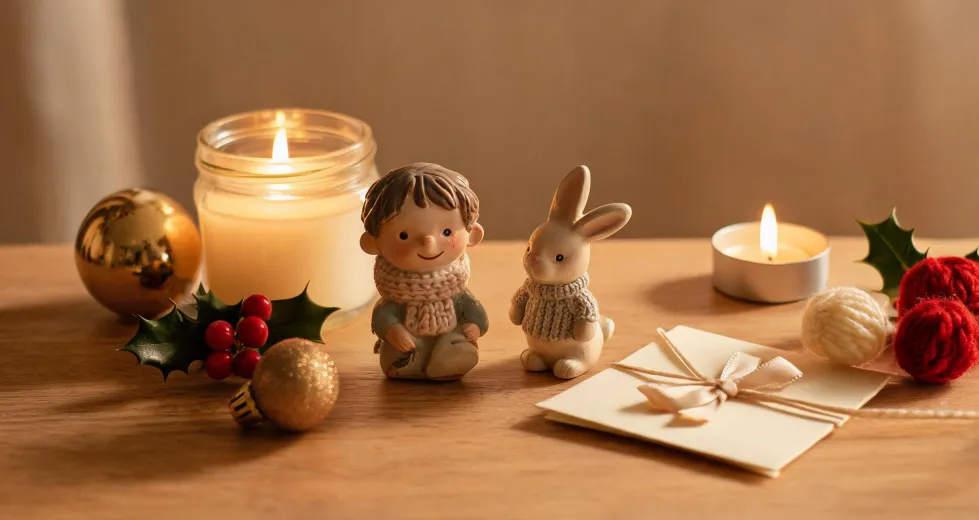
If you're sourcing enesco holiday figurines or tea sets for business gifts in 2025, here's the conclusion up front: the most expensive part of an order is rarely the item you bought. Sometimes it's the freebie that came with it. In October 2023, I saw a $3,400 enesco order nearly collapse because of a 40-cent wax melt, a warm delivery truck, and a cat named Socks. That incident taught me more about total cost than any P&L review.
I've handled corporate gifting and promotional product orders for eight years. I keep a mistake log—so far, 37 significant errors adding up to around $28,000 in wasted budget. I don't keep it to punish myself. I keep it because the next buyer who inherits this role should be able to skip the same traps. The wax melt incident is entry #31.
How a Free Wax Melt Made a Cat Part of Our QA Process
A regional credit union came to us for 125 enesco holiday figurines—the kind of order that looks straightforward on paper. We worked with a distributor who offered a bundle: order over $2,500 and get a free wax melt with each figurine. The wax melts were soft, thin ones in a cellophane sleeve. They smelled like vanilla and seemed like a nice little extra.
Our team approved it without testing one. I should say that louder: we approved it without testing one. I've stopped counting how many of my 37 mistakes started with the phrase “It's probably fine.” This one was probably not fine.
The order went out on a Tuesday, and that October week turned unseasonably hot. Inside the delivery truck, enough heat built up to soften two of the wax melts. One leaked out of its sleeve and stained the base of a snowman figurine. Another leaked in a smaller package that went directly to the credit union's office manager, who had a cat, and the cat decided the new warm-smelling thing was a bed. The wax clung to her fur in clumps.
That's how I ended up with an email at 7:15 PM. The subject line was:
how to get wax melt out of cat fur
My first thought was, seriously? Then I realized what it meant: a client who trusted our gift recommendation was now worried about their cat, at night, after hours. That's not an inconvenience—it's a relationship event.
What Worked for the Cat (and What Didn't)
For anyone who finds this page because they have the same problem: don't pull at the wax. You'll tear the fur, and if the wax is still warm, you'll make a much bigger mess. Use a little coconut oil or olive oil. Massage it gently into the wax and the fur around it. The oil breaks the bond, and the wax rolls off in clumps. Comb those out with a wide-tooth comb, then wash the spot with mild dish soap and water. No hairdryer, no hot water, no scissors unless the matting is really stubborn.
So glad the cat wasn't hurt. She easily could have been, if the manager had turned to a hairdryer or hot water out of frustration—two common suggestions that would have made things worse. We got lucky, and then we got back to work.
The replacement figurine cost us about $34 wholesale. The four hours of email explanations cost more. The story the credit union told about our company—that was the real line item. Honestly, my first instinct was to blame the distributor. They had shipped something heat-sensitive in a thin sleeve, which sounds obvious in hindsight. But we approved the bundle. The lesson wasn't “suppliers drop the ball.” It was “we didn't ask the right questions.”
What the enesco Home Grown List Taught Me About Timing
If you've ever searched for “enesco home grown list,” you probably know what it feels like to spot a collectible too late. That list is the collector community's running radar on Home Grown pieces that are getting scarce. When something on that list disappears from distributor catalogs, the secondary market price climbs quickly.
I learned this in 2021. A client asked me to source a retired Home Grown piece he'd seen at a friend's house. The wholesale price when we quoted it had been around $25. By the time he asked, the going rate on resale sites was $80 and rising. We found two at $95 each. We bought them because he wanted them, but it turned a simple sourcing task into a scramble.
Why do I bring this up? Because for corporate gifting, timing matters as much as price. If you're planning a holiday program in September and the piece you want is already on collectors' radar, you have two options: order it early or prepare your client for a possible wait. I've seen buyers gamble on a lower price later, only to discover the item is gone. The money you save by waiting is imaginary money.
Disney enesco Figurines: The $6 “Discount” That Cost $1,600
Disney enesco figurines are one of the most requested licensed gifts we handle. Official licensed pieces come with clear branding, and collectors watch for it. A few years ago, one of our buyers found an unauthorized version at a price nice enough to feel like a win. About $6 less per figurine. I still remember the day a client sent us a photo: the figurine had no stamp, no packaging insert, and the paint job was slightly off. The recipient noticed within ten seconds.
That $6 savings turned into a $1,600 problem when the account asked to replace all 45 figurines and then moved their next order to another supplier. After that, we added a rule: no licensed character product without authorization documentation. No exceptions.
And then there's the tea set lesson. We purchased 40 porcelain tea sets for a law firm's holiday gifts, and I chose the low bidder to stretch the budget. $18 per set instead of $26. It seemed sensible. But when the cartons arrived, four of the forty had craze lines—tiny cracks in the glaze caused by a firing issue. The tea sets looked old before they even reached a client. We reordered them from the reliable supplier at $26 each and absorbed the difference. The $8 per-set savings on the first batch was erased by shipping, customer service time, and the awkward conversation.
Craze lines are not just cosmetic either. The micro-cracks can trap moisture and bacteria, which is not what you want when the gift is a ceramic tea set meant for an office or home.
What to Verify Before You Buy enesco for a Client
Since that October, I've built a checklist for every order that includes enesco products. It's short, but it catches the expensive surprises:
- Confirm the supplier's authorization for licensed IP—especially for Disney enesco figurines. Ask to see the authorization if you're not sure.
- Question every “free” accessory. If it's heat-sensitive, ask how it behaves in transit and whether it can damage the main product.
- Check whether the item is part of the Home Grown lineup or another collectible series. If pieces retire, your client may expect you to warn them before quantities drop.
- Look at the tea sets and porcelain the way a recipient would, not the way a buyer would. Run your thumb over the glaze. Look at the gold trim. It doesn't matter how pretty the photo is if the glaze looks hasty.
I don't show this list to clients; it's for us. It has already caught 47 potential errors in the past 18 months, and I suspect it will catch a few more this season.
The Border Case: When a Cheaper Choice Is Fine
I don't want to be the person who says spend more on everything. That's lazy advice, and it wastes clients' money. If you're buying 50 holiday figurines as table favors for a one-time event, and the budget line says $12 per piece, a smaller or simpler enesco item may work beautifully. The problem isn't the price band—it's buying the cheap version of something that's supposed to represent your brand for years.
So when you see that low quote on a holiday figurine, ask what you're actually trading away. It might be packaging quality, licensing support, or a wax melt that ends up in a cat's fur. The best purchases are the ones you never have to explain afterwards.

Elise Laurent
Elise Laurent is a crystal and decorative glass quality analyst covering crystal figurines, vases, ornaments, suncatchers, and gift glassware. She examines ISO 6486-1 where food-contact glass dinnerware applies, then uses polarized strain inspection, dimensional checks, surface-defect grading, and refractive clarity to compare decorative pieces outside that scope. Her work helps sourcing teams choose materials, finishing routes, and protective packaging without confusing visual brilliance with verified durability.
Start a gift conversation