Enesco Figurines for Sale vs. Reed Diffusers: A Corporate Buyer’s Comparison
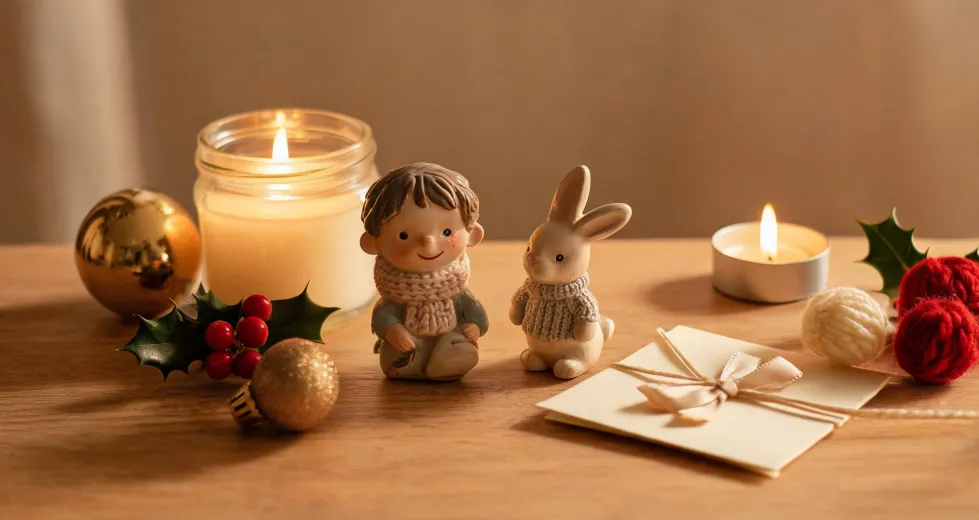
This Is Not About Taste. It’s About Which Gift Fails Less Often.
When I took over purchasing in 2020, no one handed me a gifting policy. I had to build one. Today I manage buying for a company of roughly 400 employees across three locations, which means I coordinate everything from standard office supplies to employee milestone gifts and client thank-yous. I place about 60 to 80 gift orders a year. Maybe 70; I would need to pull the report.
In the corporate gift world, two categories look similar in a catalog but behave very differently: Enesco collectibles and reed diffusers. If you are browsing Enesco figurines for sale, you usually have a keepsake in mind. If you are looking at a reed diffuser, you probably want something practical. Both choices can be right. The trick is to compare them on the things that actually cause problems: pet safety, durability, recipient fit, and shipping.
Here is the framework I use before ordering either.
Dimension 1: Pet Safety and the Cat Question
I have mixed feelings about reed diffusers. On one hand, they look refined and they do not require a flame like a candle. On the other hand, they are the first gift I stopped sending to homes without checking whether a cat lives there.
Is a reed diffuser safe for cats? The short answer is: it depends, and you should not assume yes. Most reed diffuser solutions are oil-based. Cats have fewer of the liver enzymes needed to process some aromatic compounds, which is why animal poison control resources flag essential oils and concentrated fragrance products around cats. Some of the more frequently discussed oils include tea tree, cinnamon, citrus, clove, eucalyptus, peppermint, pine, and wintergreen. That list is not a diagnosis, but it is enough to make me ask for the ingredient list before I order.
A ceramic or resin figurine can chip if dropped, but it does not sit in a bottle of oil that a cat may knock over. A snow globe needs to be checked for cracks, and it is not a pet toy. But when kept on a shelf and intact, it does not have the same exposure risk as a reed diffuser. If a cat knocks over a reed diffuser, it may step into the liquid and ingest it while grooming.
So for gifts going into homes with cats, a figurine or snow globe is the safer default. If I cannot verify a diffuser’s full ingredients, it is a no. Five minutes of verification beats five days of apologizing.
Dimension 2: Keepsake Value
Reed diffusers disappear. The liquid evaporates, the reeds lose their scent, and after a few months the gift is just a glass bottle. That is not a criticism; some gifts are meant to be useful for a season. But a keepsake is meant to stay.
This is where a collectible earns its place. A figurine can move from an office shelf to a home display cabinet and still remind someone of the person who gave it. For a wedding gift, that long view matters. The Enesco Growing Up Girl bride figurine is a good example. It marks a bride at the start of a new chapter, so it feels chosen for a moment, not picked from a generic gift list. I have used it for employee weddings and for client milestones.
The “wedding Enesco Growing Up Girl bride” search usually comes from someone who has a specific wedding memory in mind. That kind of gift has an advantage. A reed diffuser is often a guess. The recipient may not like the scent, or the scent may be nice but forgettable. A figurine takes up visual space and makes a statement.
If the goal is to mark an occasion, the figurine wins. If the goal is simply to make a room smell pleasant, the diffuser is fine.
Dimension 3: Recipient Fit
I have to defend the diffuser side here. Keepsakes are not automatically better. If I send a figurine to someone who does not collect decorative objects, it can feel like clutter. A reed diffuser is easier to use up and easier to pass along without emotional pressure. That makes it a practical pick for a welcome kit, a hostess gift, or an office gift exchange where you do not know anyone’s taste well.
The counterintuitive part is that the practical option can still fail more often. A figurine may not match a style, but it rarely triggers an allergy or a cat-safety issue. A reed diffuser may be practical, but practicality does not remove fragrance sensitivities. In a corporate program, those issues multiply. If I buy one scent for a large group, even a few negative reactions can undo the goodwill the gift was supposed to create.
If a recipient is neutral about figurines, an Enesco snow globe often works as a middle path. It still feels like a keepsake, but it does not depend on whether someone already collects figurines. Snow globes can be seasonal or themed, so they can celebrate a shared experience instead of testing someone’s taste in decorative sculptures.
The more personal the occasion, the more a figurine makes sense. The more casual the occasion, the more important it is to confirm scent preferences, pet ownership, and allergies before choosing a reed diffuser. Guessing is not a policy.
Dimension 4: Packaging, Shipping, and Reordering
Catalogs do not show this part, but bulk buying is where gifts either work or fall apart. In large quantities, both figurines and reed diffusers are more fragile than they look. The failure modes are different, though.
Enesco figurines and snow globes usually need padded inner packaging and a sturdy outer carton. Before I order dozens of pieces, I unbox a sample. I ask whether the distributor drop-ships or palletizes. In our 2024 vendor consolidation project, I reviewed packing standards with eight different vendors, which is how I caught a pattern of thin cartons before we committed to a large seasonal order.
Reed diffusers bring glass, liquid, reeds, and caps. They can leak in transit, formulas can change from batch to batch, and the oil can oxidize over time. If I store a big order through the summer and send it in December, the fragrance may not match the sample I smelled in April. That makes the diffuser a conditional gift from a procurement perspective.
It took me three years and about 150 orders to understand that supplier reliability matters as much as product beauty. A good product in a bad box is still a bad gift. That is why I ask for packaging photos and a replacement policy before I place a large order. I do not want to explain to my director why 50 damaged snow globes arrived on the same afternoon.
What Should You Order?
The honest answer depends on the recipient and the occasion, but I use a few rules to avoid repeat mistakes.
- If the gift goes to a cat owner’s home: choose a non-scented keepsake such as an Enesco figurine or snow globe over a reed diffuser. If you must send a reed diffuser, confirm the full ingredient list, the concentration, and the intended placement before shipping.
- If the occasion is a wedding: the Enesco Growing Up Girl bride figurine is a stronger keepsake than a reed diffuser. It names the occasion and gives the couple something to display later.
- If the occasion is casual and you know the recipient has no pets or fragrance sensitivities: a reed diffuser can be a lovely practical gift. Just don’t assume one scent works for everyone.
- If you are ordering for a large group or for recipients you don’t know well: avoid one scented product for all of them. Use an unscented decorative option or collect restrictions before you place the order.
I do not think reed diffusers are bad gifts. I think they are conditional gifts. The same is true for collectibles because breakage and taste will always be real risks. My job as a buyer is not to be clever. It is to check first, order second, and choose gifts that are safe, durable, and appropriate for the specific person on the label.

Elise Laurent
Elise Laurent is a crystal and decorative glass quality analyst covering crystal figurines, vases, ornaments, suncatchers, and gift glassware. She examines ISO 6486-1 where food-contact glass dinnerware applies, then uses polarized strain inspection, dimensional checks, surface-defect grading, and refractive clarity to compare decorative pieces outside that scope. Her work helps sourcing teams choose materials, finishing routes, and protective packaging without confusing visual brilliance with verified durability.
Start a gift conversation